Outdoor 5G Antenna Installation in Kuwait

UltraTech Kuwait installs outdoor 5G units on roofs and walls anywhere in Kuwait, so your home or office gets faster, steadier internet than a weak indoor signal allows. We visit the site, mount the unit and run the cable, aim it at the strongest tower, and record the measured speed in your handover report.

Home technical visits: Site visits are free in most areas of Kuwait. Distant areas have a location-based fee; select your area to see the exact fee before booking. Any paid visit fee is deducted from your final invoice if you go ahead with us.

Reviewed by Eng. M. Ahmed, Team Leader, Network & Project Specialist

Last updated:

Illustration: from the cell tower to the outdoor unit on the roof, then by cable to the router inside and your devices
  • Zain, stc and Ooredoo
  • Usually one visit to install
  • Measured speed recorded at handover
  • Villas, flats, offices and industrial sites

01

Do I need an outdoor 5G unit?

Illustration: signal weakens through walls and glass but stays strong at the outdoor unit on the roof
  • Weak signal indoors. An indoor 5G router picks up little signal and speeds drop in rooms far from a window.

  • Reflective or thermal glass. ITU-R names metallised glass among the materials that make building entry loss "significantly higher" than in traditional buildings 5. Figures below.

  • Villa upper floors or a basement. Upper floors see the tower better; basements and inner rooms need the unit up on the roof.

  • Far from the tower. The further you are, the more a pointed outdoor antenna helps over an indoor device.

If one of these sounds like you, an outdoor unit usually makes the difference. We confirm it by measuring the signal at your address before installing.

02

What speeds to expect

What speeds to expect
FigureDownloadUpload
Zain 5G, Kuwait median, Q1–Q2 2026 (Ookla) 1514.59 Mbps34.74 Mbps
TP-Link NE200-Outdoor, 5G rated maximum 13up to 4.67 Gbpsup to 1.46 Gbps
Zain 5G carrier-aggregation trial, 2022 42.5 Gbps (trial)not stated

The first row is what users measured on Zain's network. The others are laboratory maximums that need several aggregated carriers, not what a customer should expect. We could not open a published Ookla or Opensignal median for stc or Ooredoo, so we quote none. Your real speed depends on carrier, plan, location and tower load, so we measure at your address and write it in the handover report.

03

What the studies and standards say

Figures are quoted as published, with their date. Numbers in brackets point to the sources at the bottom of the page.

  • 514.59 Mbps

    Zain's median 5G download in Kuwait, Ookla, Q1–Q2 2026; median upload 34.74 Mbps 1

  • 7,844 km²

    Zain's verified coverage area in the same Ookla analysis, from 37,480 devices and over 43.6 million scans 1

  • ≈ 15.7 dB vs ≈ 30.9 dB

    Median horizontal-path building entry loss at 3.5 GHz, traditional vs thermally-efficient buildings: our calculation from ITU-R P.2109-2, Table 1 5

  • 42–46 °C

    Average daily maximum in Kuwait's dry summer period, per the Kuwait Meteorological Department; record 51.3 °C at Kuwait International Airport on 20 August 1998 11. WMO verified 53.9 °C at Mitribah on 21 July 2016, the highest recorded in Asia 12

Signal quality bands (RSRP)

Thresholds from one router vendor's guide; indicative only 6

  • Very poor

    < −100 dBm

  • Fair / poor

    −90 to −100

  • Good

    −80 to −90

  • Excellent

    ≥ −80 dBm

Building entry loss at 3.5 GHz

Median horizontal path, our calculation from ITU-R P.2109-2 5

  • Traditional building≈ 15.7 dB
  • Thermally-efficient building≈ 30.9 dB

Download speed, Mbps

A measured median beside rated maximums, not what to expect 1

  • Zain median, Kuwait 2026514.59 Mbps 1
  • Zain carrier-aggregation trial 20222.5 Gbps 4
  • NE200-Outdoor rated maximum4.67 Gbps 13

Kuwait heat against the NE200 rating, °C

Summer average and records 1213 against the spec-list limit 13

  • Average summer daily maximum42–46 °C 11
  • NE200 specification list, top of range50 °C 13
  • Kuwait airport record, 199851.3 °C 11
  • Mitribah 2016, WMO-verified53.9 °C 12

The ITU-R figure is our arithmetic on the Recommendation's published coefficients (the frequency-dependent term for a horizontal path). It is a statistical model of typical buildings, not a measurement of yours.

04

What we install

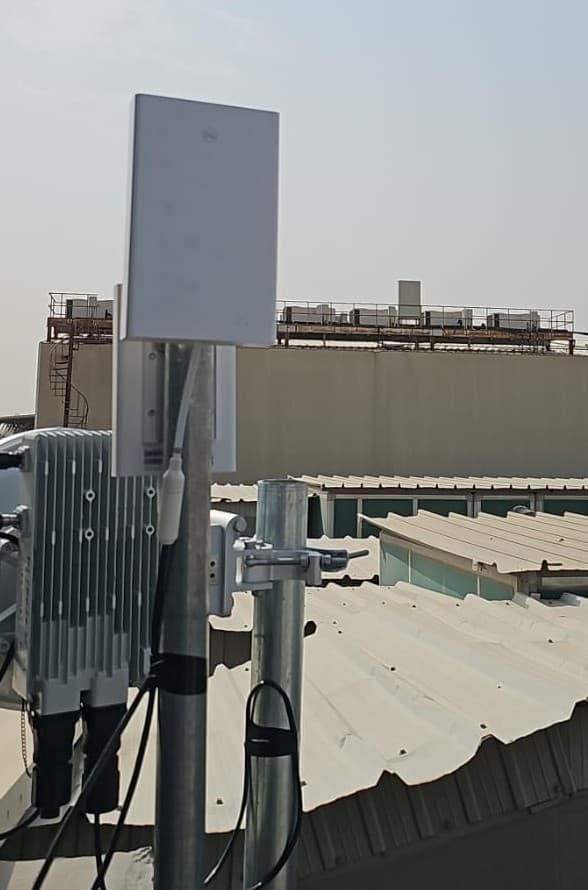
  • Antenna and mastRoof mast, wall bracket or pole, fixed to the structure.

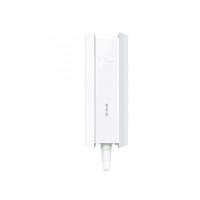
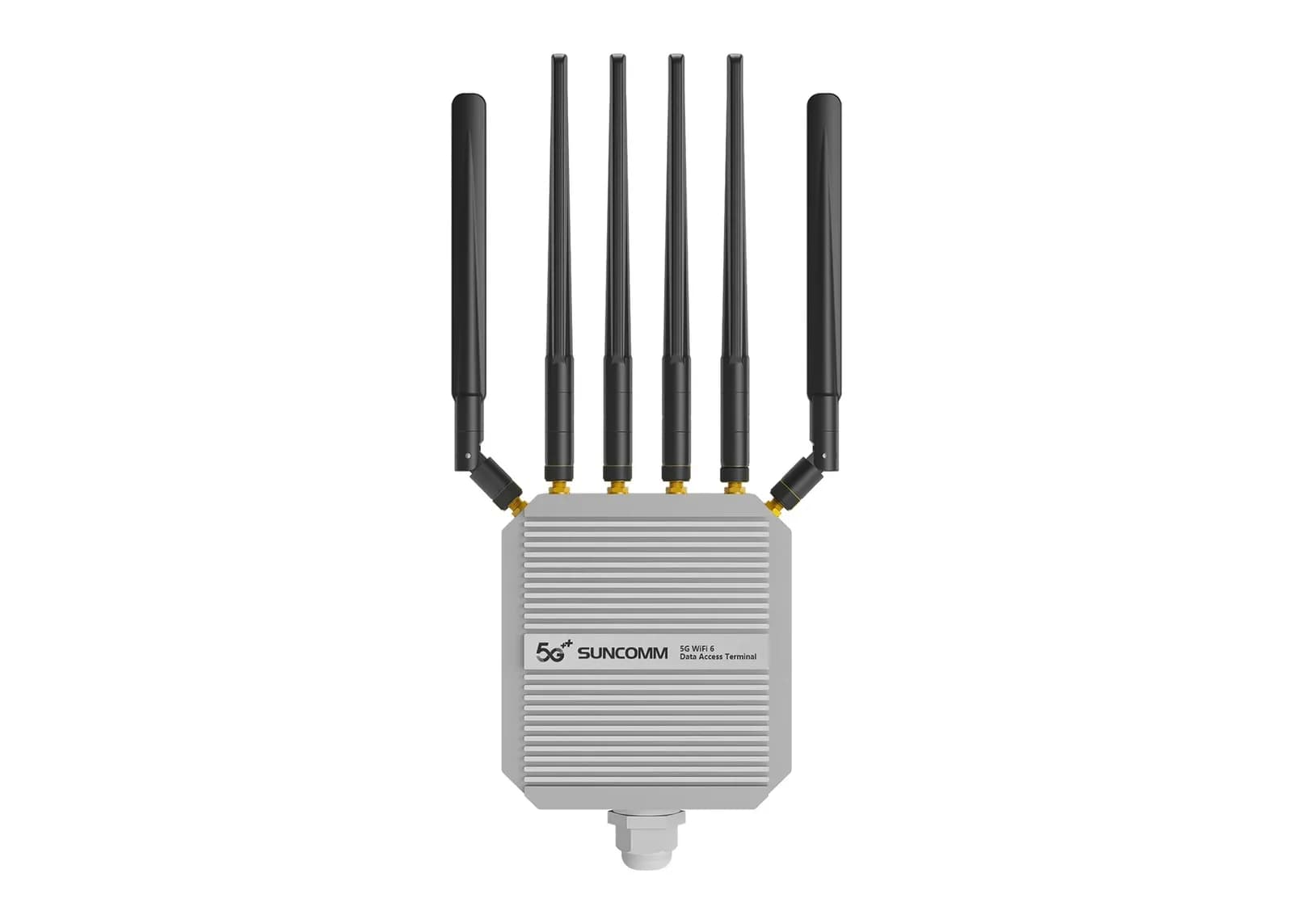
  • Outdoor unitA 5G unit rated for sun and dust, mounted and sealed.

  • Cable and protectionOutdoor cable from roof to router, with earthing and surge protection.

  • Aiming and tuningWe point it at the strongest tower and measure before and after.

  • Network hand-offConnected to your router, firewall or switch.

  • Handover reportSpeeds, photos and settings recorded at the end.

Mount types

  • Illustration of an outdoor unit on a roof mast

    Roof mastBest for villas and buildings: the highest point with the clearest path.

  • Illustration of an outdoor unit on a wall bracket

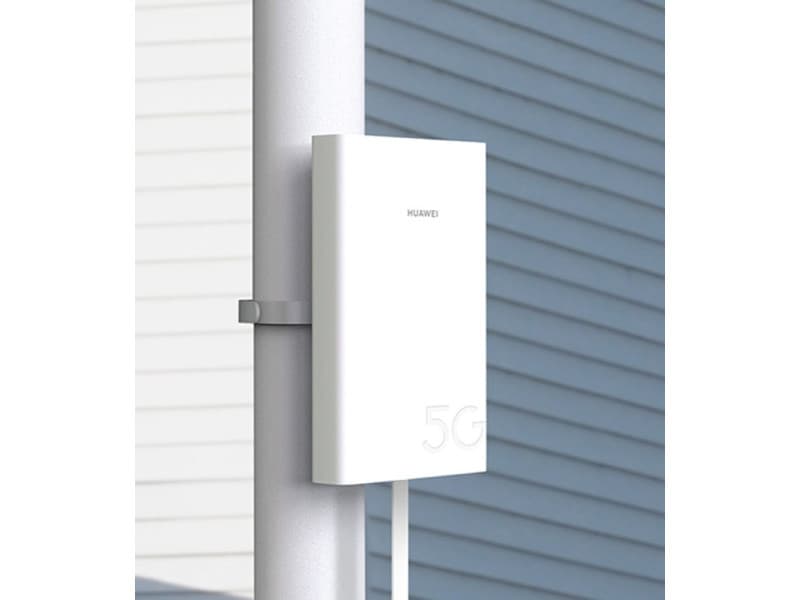
    Wall bracketSuits flats (balcony or outside wall) and small buildings.

  • Illustration of an outdoor unit on a free-standing pole

    Free-standing poleFor warehouses and sites without a suitable roof.

Technical detail
  • Aiming uses live RSRP, RSRQ and SINR readings; we test more than one position before the final fix.
  • Band locking where it gives a steadier link.
  • Mast grounding and surge protection where the cable enters the building.
  • VLAN, NAT, DHCP and port-forward settings, plus multi-WAN failover or load-sharing when there is more than one unit.
  • Shielded outdoor Ethernet or fiber patch depending on distance, with sealed entries and drip loops.

05

How a job goes

  1. 1

    Site visitWe measure signal and choose the mount point and cable route.

  2. 2

    Mount and cableWe fit the unit, earth it and run the cable to the router.

  3. 3

    Align and testWe fine-tune the direction and test speed and stability.

  4. 4

    HandoverYou get a report with measurements, settings and photos.

06

Worked examples

Scenarios that apply the sourced figures. They are not customer jobs and not measurements we took.

Arithmetic illustration

A villa behind low-E glass

  • Suppose a meter just outside the window reads −75 dBm, which is Excellent on the table above 6.
  • Subtract the median entry loss at 3.5 GHz 5: about −91 dBm indoors for a traditional building, about −106 dBm for a thermally-efficient one, which is below the −100 dBm line for Very poor 6.
  • This ignores antenna gain and other losses. It shows why the same carrier can feel fine in one house and unusable in the next, and why we measure at your address.
Limits illustration

A roof unit with a long cable

  • A mast on a villa roof with a long cable run to the router: the run has to be checked against the Ethernet segment limit for the speed in use 10 (our engineering note).
  • The unit's power draw on its datasheet must fit the PoE class of the port 8,9; otherwise it is powered from its own adapter (our engineering note).

From datasheets

Choosing between units

  • In full sun compare the operating-temperature lines on each datasheet: the NE200 specification list gives −30 to 50 °C 13, against Kuwait's average summer maximum of 42–46 °C and a 51.3 °C airport record 11.
  • IP ratings classify the protection an enclosure gives 7; in Kuwait's climate 11 temperature and shade usually decide more than the water digit (our engineering note).

07

Technical depth

Open a block for the detail. The numbers in brackets are the sources below.

Reading the signal: RSRP, RSRQ and SINR

We aim and tune on these three readings. The labels are one router vendor's published guide, so read the thresholds as indicative: modems and carriers differ 6.

Reading the signal: RSRP, RSRQ and SINR
MetricWhat it measuresExcellentGoodFair / poorVery poor
RSRPPower of the reference signal from the serving cell 6≥ −80 dBm−80 to −90−90 to −100< −100 dBm
RSRQSignal quality against total received power, like Ec/Io in 3G 6≥ −10 dB−10 to −15−15 to −20≤ −20 dB
SINRWanted signal against interference plus noise; shows channel capacity 6≥ 20 dB13 to 20 dB0 to 13 dB≤ 0 dB
  • A strong RSRP with a poor SINR points to interference or a busy cell, not good coverage, so the nearest tower is not always the best one to aim at (our engineering note).
Why glass and concrete cost you signal

ITU-R P.2109-2 splits buildings into two populations for entry loss. Where metallised glass or foil-backed panels are used, loss is generally significantly higher than for traditional buildings 5.

Why glass and concrete cost you signal
Building classMedian loss term at 3.5 GHz (calculated from Table 1)
Traditional≈ 15.7 dB
Thermally-efficient≈ 30.9 dB
  • The Recommendation gives U-values below 0.3 (main structure) and below 0.9 (metallised glass) as representative of thermal efficiency, and lists insulated cavity walls, thick reinforced concrete and metal-foil cladding as indicators 5.
  • It applies from about 0.08 to 100 GHz and describes distributions, not one building 5. That extra loss is why a unit outside the building, on the roof, helps.
5G in Kuwait: what we could verify
  • Zain completed a carrier-aggregation test of 2.3 GHz and C-band in October 2022 and reported 2.5 Gbps download 4.
  • Zain rolled out 5G-Advanced across most of Kuwait in July 2025 3.
  • In August 2025 5G-A was deployed for all three operators, Ooredoo, Zain and stc, with Huawei and Knetco 2.
  • We could not open a source listing the bands each operator uses today, so we publish none. Each unit lists the bands it supports (hardware table) and we check what your carrier delivers at your address.
Units we supply: protection, temperature, antenna, power

From the manufacturer page where marked; otherwise from the specifications on our own product pages.

Units we supply: protection, temperature, antenna, power
ModelProtectionOperating temperatureAntennaPower
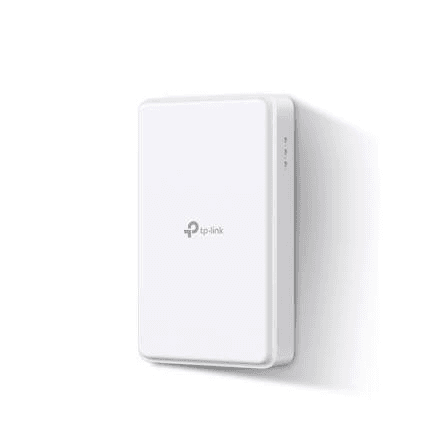
TP-Link NE200-OutdoorIP66 13; ±6 kV lightning and ±15 kV ESD claimed under lab conditions 13−30 to 50 °C on its specification list; its overview says up to +60 °C 13Internal 5G NR/LTE, bands n1 to n78 as listed by the maker; no gain published 13802.3af PoE (36–57 V, 0.35 A) or 48 V, 0.375 A DC 13
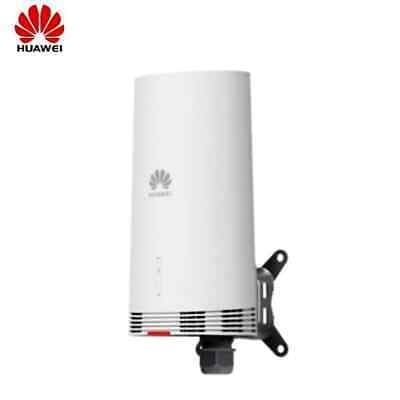
Huawei CPE MAX 5 H352-381IP65 (our catalogue)see product pagesee product pagesee product page
Huawei CPE MAX 6 H362-383IP65 (our catalogue)−40 to +55 °C (our catalogue)Up to 11 dBi (our catalogue)PoE adapter (our catalogue)
TP-Link NE211-OutdoorIP67 (our catalogue)see product pageInternal 5G NR/LTE (our catalogue)802.3at PoE or 48 V passive (our catalogue)
  • IP codes classify the degree of protection an enclosure gives; the classification and its test conditions are defined in IEC 60529 7. We read the rating on each unit's own page and do not rely on the digit alone.
  • Antenna gain differs by band and by unit and is rarely published in full. Ask for the datasheet figure before comparing two units, and trust measured RSRP and SINR at the mount point (our engineering note).
Cable, PoE and lightning
  • Twisted-pair Ethernet, including 2.5GBASE-T (IEEE 802.3bz) 10, has a defined maximum segment length. We check the real cable length against the standard for the speed in use and add a switch or a fiber patch where a run is too long (our engineering note).
  • PoE power is set by the class of the injector or switch port (IEEE 802.3af and 802.3at 8, 802.3bt 9). We compare the unit's power draw on its datasheet with what the port supplies, and use the unit's own adapter where the port falls short (our engineering note). The NE200 takes 802.3af PoE or 48 V DC 13.
  • Surge protection and earthing are fitted where the cable enters the building. TP-Link states its lightning rating is a lab figure; the CE-level test values on the same page are 2 kV differential and 4 kV common-mode 13.
Heat, dust and rain in Kuwait
  • In its dry summer period Kuwait's average daily maximum is 42–46 °C, and the highest maximum at Kuwait International Airport was 51.3 °C on 20 August 1998 11. WMO verified 53.9 °C at Mitribah on 21 July 2016, the highest temperature recorded in Asia 12.
  • Annual rainfall at the airport ranged from 32.3 mm (2021) to 344.1 mm (2018) in the Department's 2017–2023 table, and spring thunderstorms are sometimes accompanied by severe dust storms between about 10 March and 8 April 11.
  • The NE200 specification list gives −30 to 50 °C (its overview says up to +60 °C) 13, while the airport record is 51.3 °C before the sun heats the case 11. We mount for shade and air flow where the signal allows, and keep a drip loop on every cable.
Public IP, CGNAT and failover
  • Carriers can number links with carrier-grade NAT, and the IETF reserved the shared block 100.64.0.0/10 for it 14. If the router's WAN address is in that block, inbound port forwarding generally will not work (our engineering note); use a carrier public IP, a VPN or a cloud relay.
  • Two units on different carriers into one firewall give load sharing or automatic failover; see the business pages linked below.

08

Outdoor 5G or fiber?

Illustration: 5G reaches the building through the air with no digging, while fiber is a buried cable
Outdoor 5G or fiber?
AspectOutdoor 5GFiber
Install timeUsually one visit, no civil worksDays to weeks, depending on availability
SpeedVaries with signal and congestionSteady, per your plan
ReliabilityGood when properly mounted; can vary at busy timesMost consistent, but one cut takes it down
Best roleWhere fiber is unavailable, or as a backup linePrimary line where available

10

For businesses and industrial sites

Illustration: a primary fiber line and a standby 5G line both feed one firewall, then the office network

An outdoor unit can be a branch's main line or a backup beside fiber. We can fit two units on different carriers into one firewall for load sharing or automatic failover. The detail is on our business pages: 5G business internet, Multi-WAN failover, Load balancing. Maintenance contract clients get a same-day response to critical faults; regular visits run 09:00–18:00, with critical faults only outside those hours.

09

Outdoor 5G units we supply

We pick the final model after measuring signal at your address.

11

Common questions

Does outdoor 5G work in a flat?
Yes. In a flat we usually mount the unit on the balcony rail or an outside wall, or on the roof with the building's permission, then run a slim cable inside. Villas and buildings are easier because a roof mast often gives the best signal.
Which carrier should I choose: Zain, stc or Ooredoo?
We work with all three. The best one differs by location, so we measure the signal at your address and recommend the right one. In business designs we sometimes combine two carriers for independent paths.
Will it survive Kuwait's heat, dust and rain?
Yes, when installed properly. We use units made for outdoor use, UV-resistant fixings and sealed cable entries with drip loops, and place the unit to limit direct sun where the signal allows.
What if the signal drops or speeds fall?
Contact us and we re-measure. It is usually aim, plan or tower congestion, and we fix it by re-aiming, band locking, trying another carrier or adding a second unit.
How long does installation take?
A simple single-unit job is usually done in one visit once we agree the plan. Larger projects or long cable runs are scheduled with a written plan.
How much does it cost?
The unit price is shown under Equipment, and a mast or long cable run is quoted after the visit. Home technical visits: Site visits are free in most areas of Kuwait. Distant areas have a location-based fee; select your area to see the exact fee before booking. Any paid visit fee is deducted from your final invoice if you go ahead with us.

Let us measure the signal at your address

Home technical visits: Site visits are free in most areas of Kuwait. Distant areas have a location-based fee; select your area to see the exact fee before booking. Any paid visit fee is deducted from your final invoice if you go ahead with us.

12

Sources and further reading

Every figure above comes from these pages. Items marked "our catalogue" come from the specifications on our own product pages.

  1. 1.Zain Kuwait retains triple Ookla Speedtest titles for its 5G networkKuwait Times (citing Ookla, Q1-Q2 2026), 28 Sep 2026
  2. 2.Kuwait deploys 5G-A with Huawei and KnetcoRCR Wireless News, 25 Aug 2025
  3. 3.Zain launches 5G-Advanced across KuwaitRCR Wireless News, 2 Jul 2025
  4. 4.Zain Kuwait completes 5G carrier aggregation 2CC testing achieving 2.5Gbps speedKuwait Times, 10 Oct 2022
  5. 5.Recommendation ITU-R P.2109-2: Prediction of building entry lossITU Radiocommunication Sector, Aug 2023
  6. 6.Teltonika: Signal Range Anxiety with 4G/5G Signal Metrics (RSRP, RSRQ, SINR)Forest Rock knowledge base, Jun 2026
  7. 7.IEC 60529: Degrees of protection provided by enclosures (IP Code)International Electrotechnical Commission (IEC webstore), accessed 15 Nov 2026
  8. 8.IEEE P802.3at DTE Power Enhancements Task Force (IEEE Std 802.3at-2009)IEEE 802.3 Ethernet Working Group, Sep 2009
  9. 9.IEEE P802.3bt DTE Power via MDI over 4-Pair Task Force (IEEE Std 802.3bt-2018)IEEE 802.3 Ethernet Working Group, 27 Sep 2018
  10. 10.IEEE P802.3bz 2.5/5GBASE-T Task Force (IEEE Std 802.3bz-2016)IEEE 802.3 Ethernet Working Group, 22 Sep 2016
  11. 11.Kuwait climate: summer temperatures, rainfall and dust (Climate section)Kuwait Meteorological Department (met.gov.kw), accessed 15 Nov 2026
  12. 12.WMO verifies 3rd and 4th hottest temperature recorded on EarthWorld Meteorological Organization, 2019
  13. 13.NE200-Outdoor 5G outdoor router: specificationsTP-Link (UAE product page), accessed 15 Nov 2026
  14. 14.RFC 6598: IANA-Reserved IPv4 Prefix for Shared Address SpaceIETF, Apr 2012

Opened and read on 15 November 2026. Opensignal's Kuwait reports, Ookla's own Speedtest Global Index pages and the 3GPP/ETSI specification PDFs refused automated access, and Huawei's own product pages could not be opened, so we cite none of their numbers. The IEC and IEEE pages cited confirm the standards and their dates only, so we quote no watt or cable-length figures from them.